
Crevano · Templates · Calendar and Planner Templates
Calendar and Planner Templates
20 printable calendar and planner pages at 300 DPI, including wall and desk calendars set to real months of 2027, undated monthly grids, weekly spreads, daily pages and trackers. The dated calendars start where a real month starts, on the right weekday with the right number of days. The planners carry no year at all. On every one, the month, the year and each day number are editable text, so any grid can be reset to the month you actually need.
| Trim sizes | 11 × 17 in · 12 × 12 in · 8.5 × 11 in · 11 × 8.5 in · 7 × 5 in |
|---|---|
| Bleed | none · 0.125 in |
| Resolution target | 300 DPI |
| Templates | 20 |
| Pages | 20 |
No templates match that.
Calendar and planner templates (20)
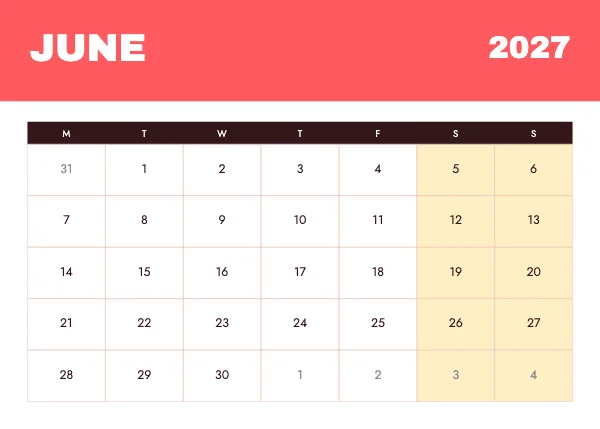 Monthly Desk CalendarPro
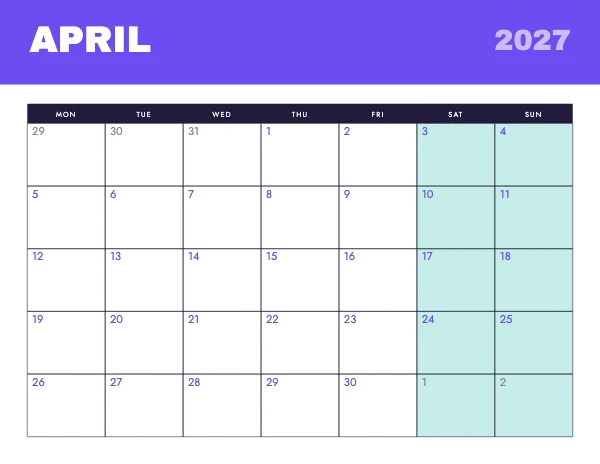 Monthly Wall CalendarPro
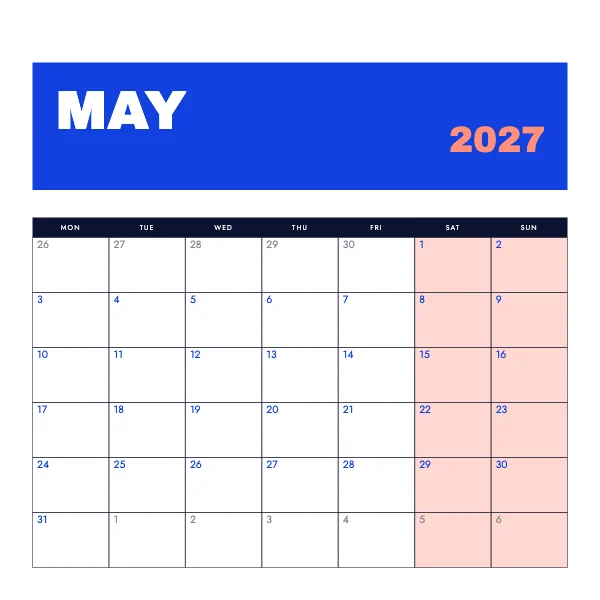 Monthly Square Hangable Wall CalendarPro
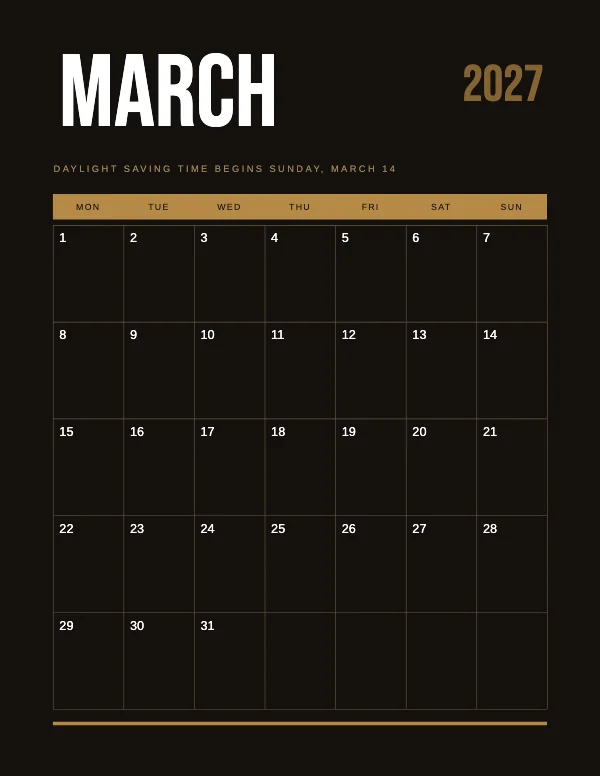 Monthly Wall Calendar
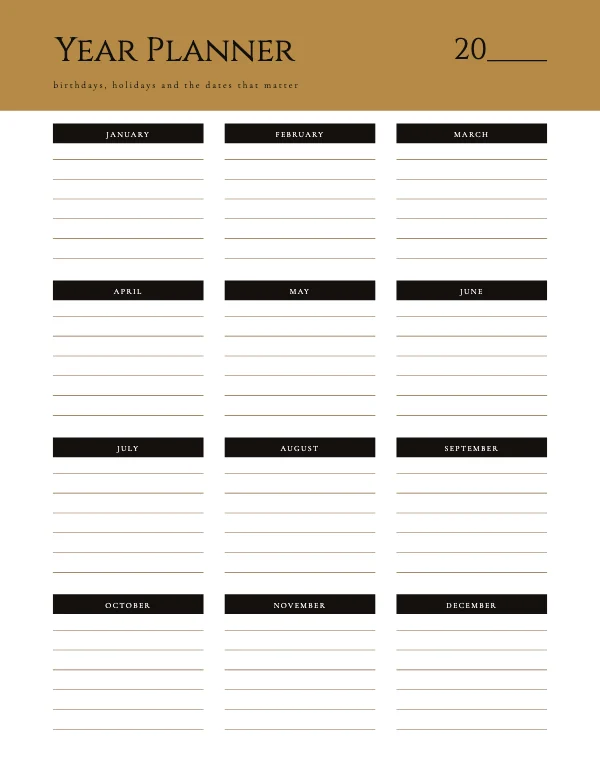 Undated Year at a GlancePro
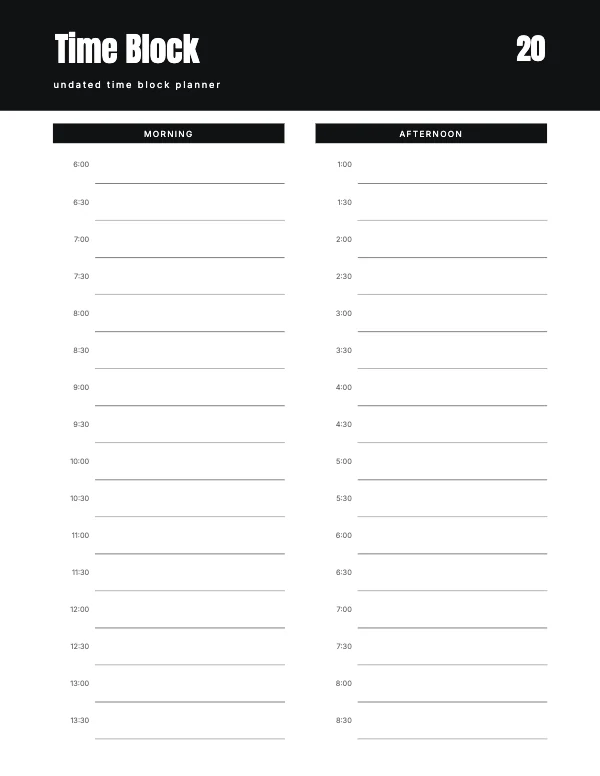 Undated Time Block PlannerPro
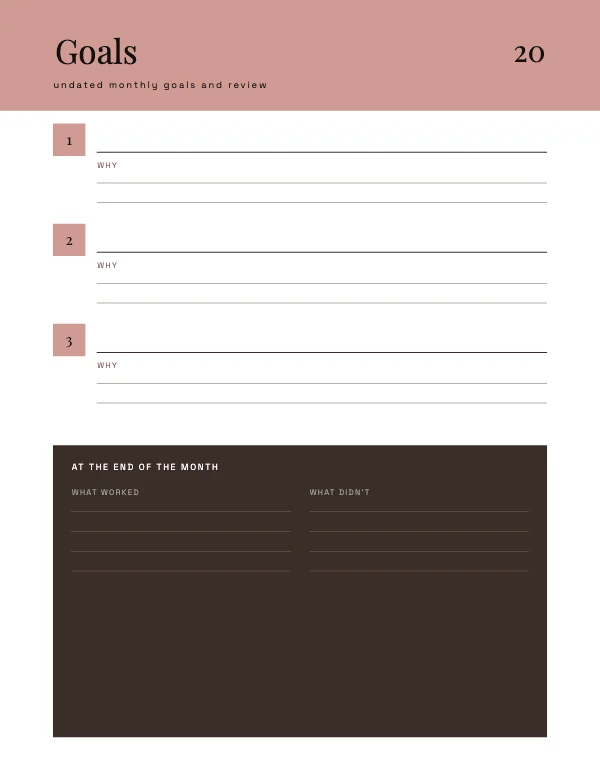 Undated Monthly Goals PagePro
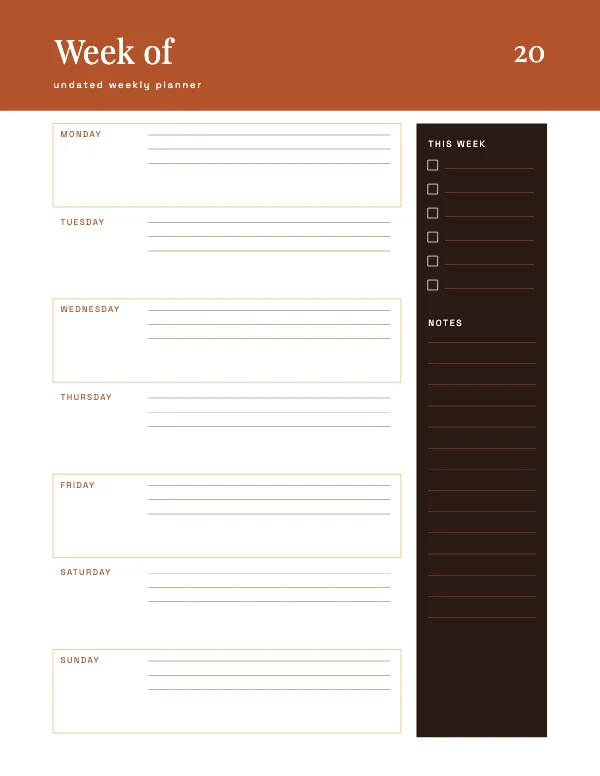 Undated Weekly PlannerPro
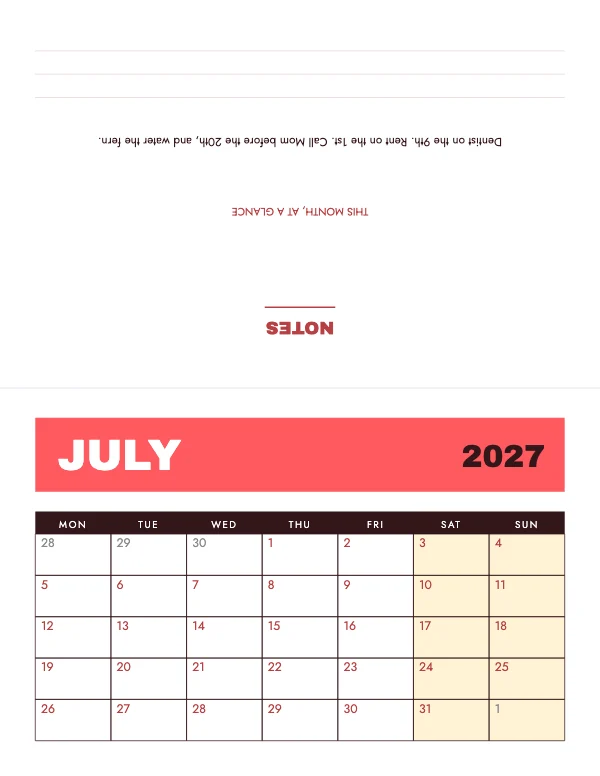 Monthly Folded Desk Tent CalendarPro
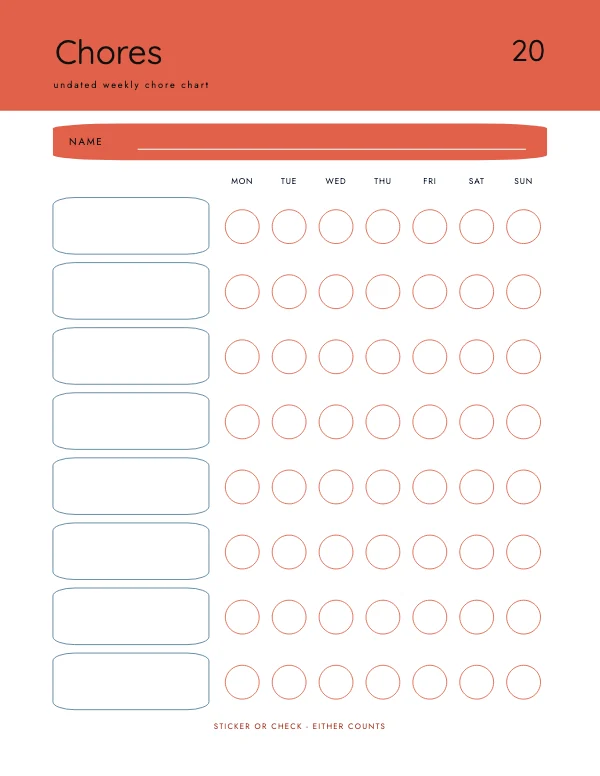 Undated Chore Chart
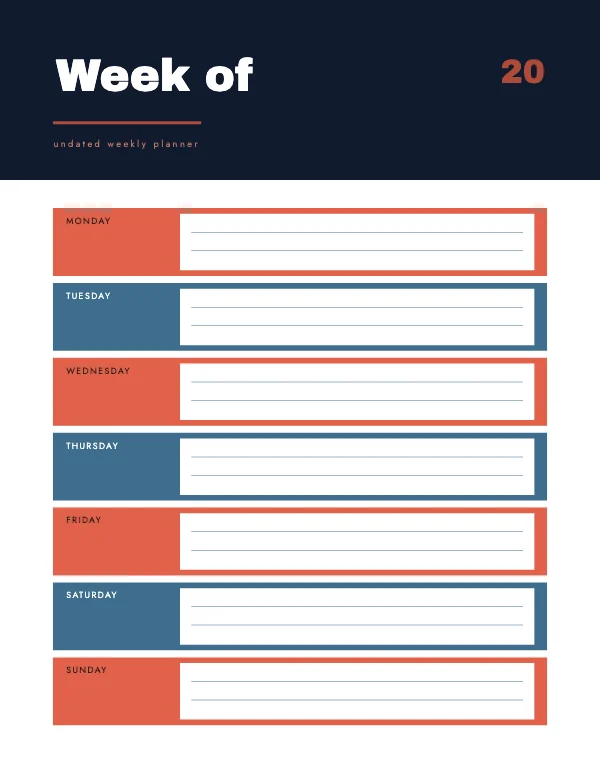 Undated Weekly PlannerPro
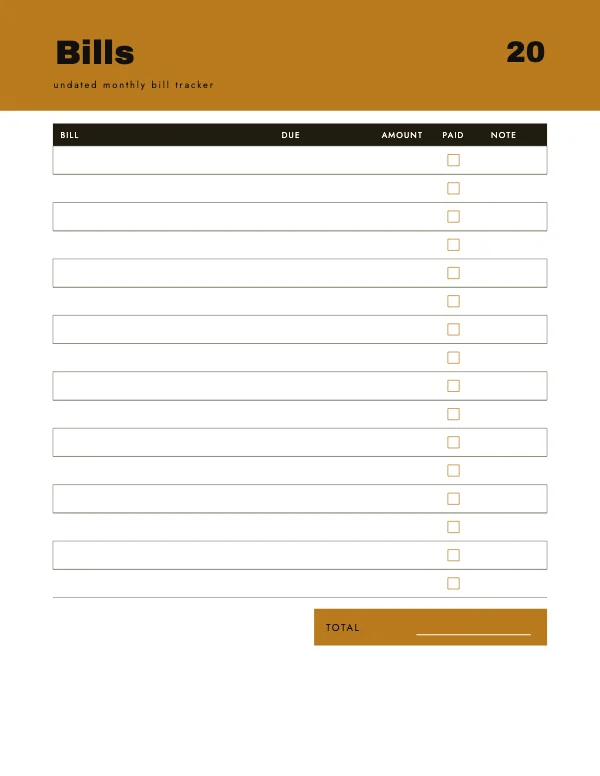 Undated Monthly Bill Tracker
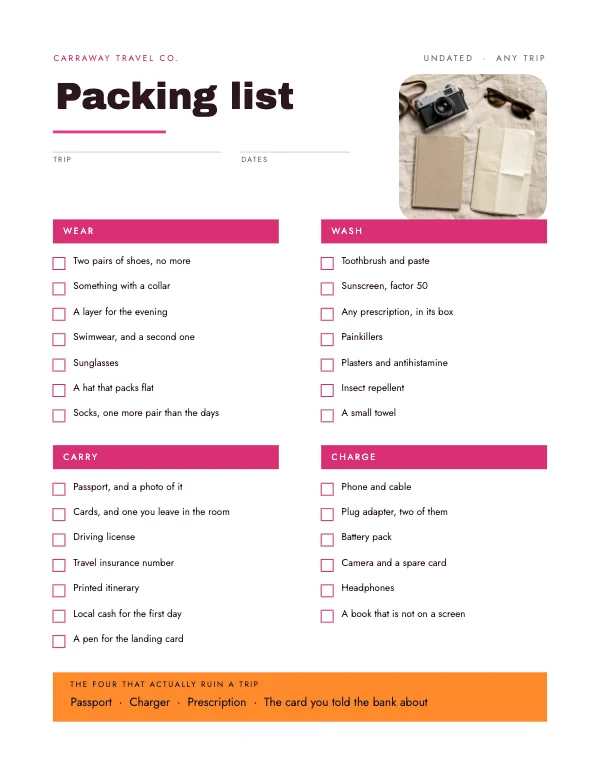 Travel Packing Checklist
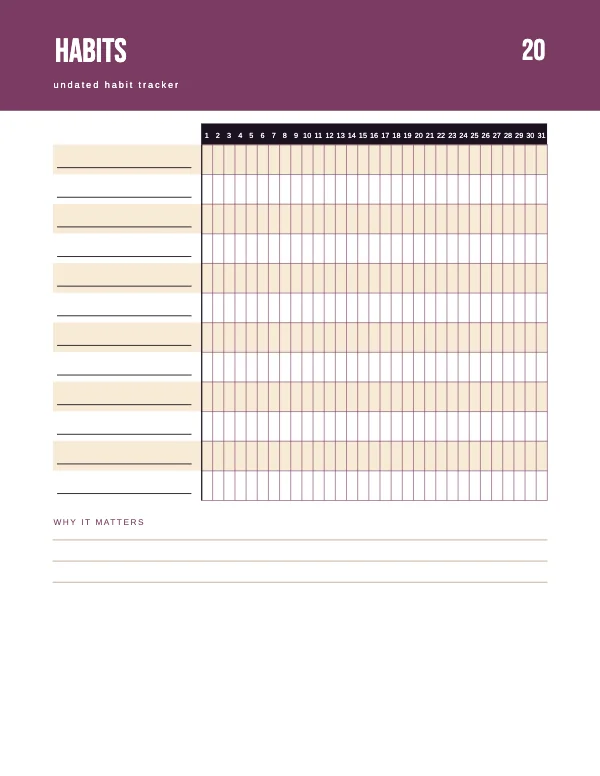 Undated Habit TrackerPro
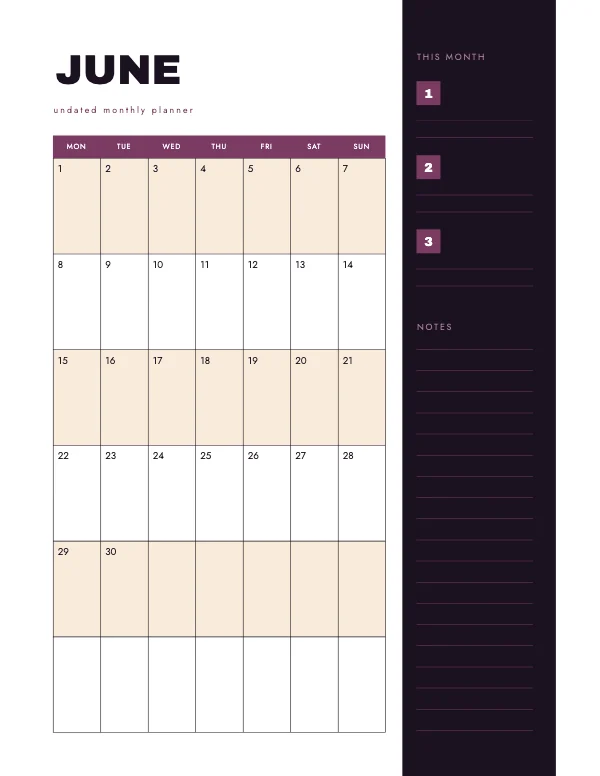 Undated Monthly PlannerPro
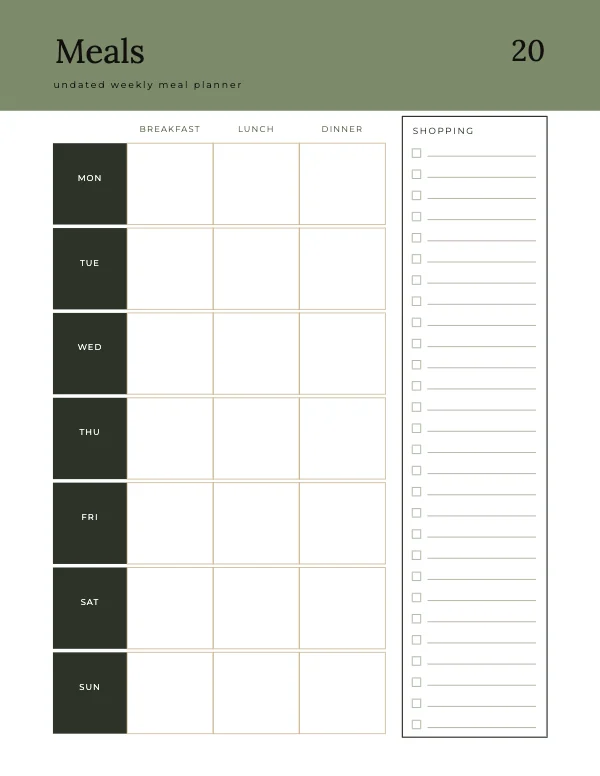 Undated Weekly Meal PlannerPro
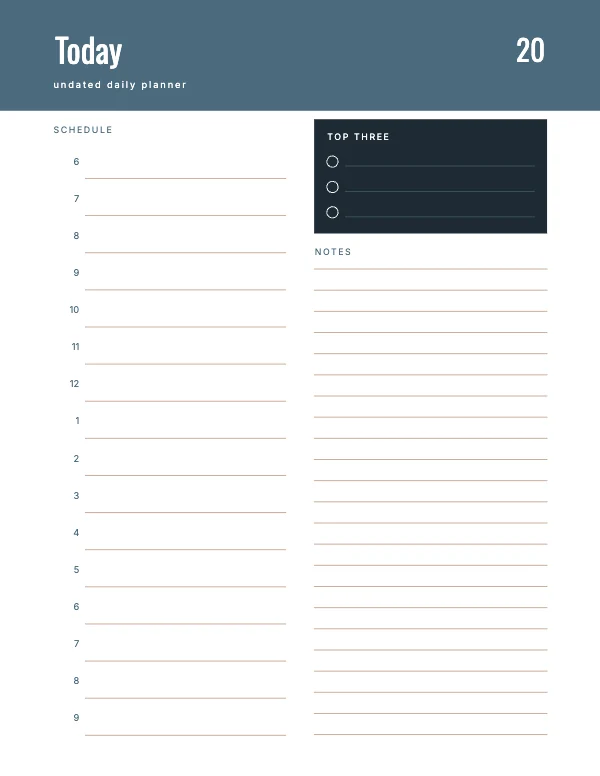 Undated Daily Planner
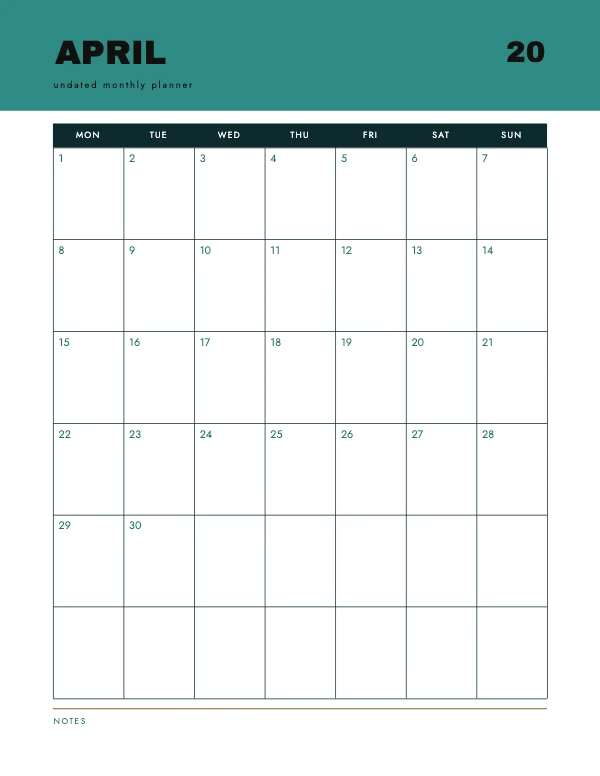 Undated Monthly CalendarPro
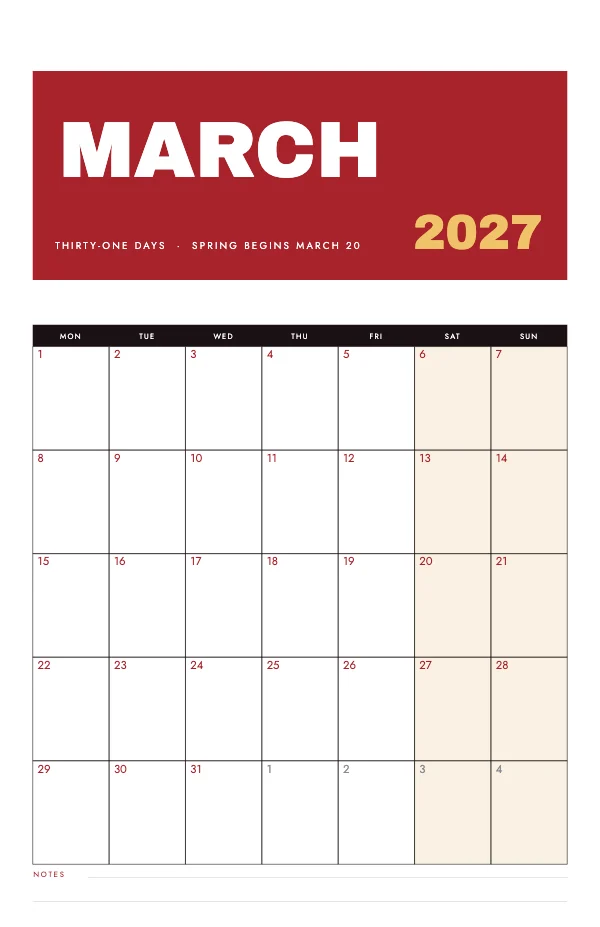 Monthly Hangable Wall Calendar
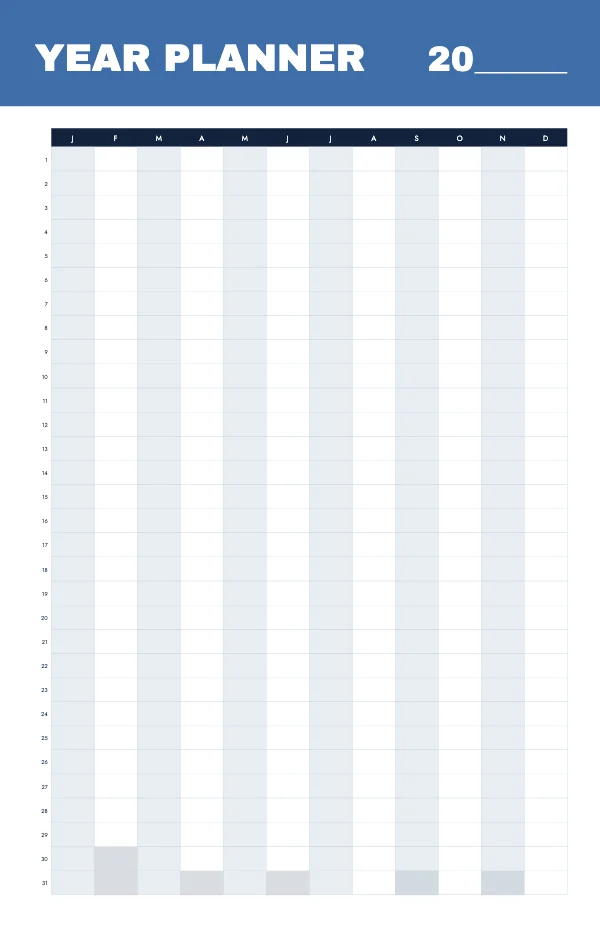 Undated Year Wall PlannerPro
Dated or undated: which calendars are which
The section holds both kinds, and the name on each card tells you which one you are looking at.
The dated calendars are set to real months of 2027. These are the wall and desk month calendars whose names leave out "Undated", from the 7 × 5 desk card to the 12 × 12 square wall month, and each prints one named month with its year. Day one sits on the weekday that month really starts on, the grid runs to the right number of days, and where a grid shows the next or previous month's dates, they are grey. A calendar with dates that could not exist is worse than a blank one, and these were checked against the real 2027 calendar.
The undated pages carry no year. That covers the weekly and daily planners, the trackers, the year planners and the monthly planner grids. A couple of those planner grids show a month name as a sample, but there is no year on them, so they are not tied to one. A blank-year page is what a lot of people genuinely want: a planner for a project, a term, a sprint or a trip, where the shape of the month matters more than the calendar year.
Either kind can become the other. The month name, the year and every day number are editable text, not baked into the design. Retype a 2027 month as another month, or fill in an undated grid for the month in front of you, and save the file. The trade is honest: resetting a month is about thirty seconds of typing, and the day-one weekday is the part to check.
What this is not: it is a printable, not a spreadsheet
Worth saying plainly, because it is the most common mismatch in this category.
Crevano produces a printable page — a PDF and image files. It does not produce a Word document, an Excel sheet, a Google Sheet or a Google Doc, and the PDF it writes holds each page as an image rather than as live text, so it is not a file you type into after the fact either.
| What you want | Where to get it |
|---|---|
| A page you design, print, and write on by hand | Here |
| A calendar you type into on a computer and keep updating | A spreadsheet or a word processor |
| A digital planner you annotate on a tablet | These export as images, which most note apps import — but a purpose-built digital planner will be better |
If the plan is to keep the calendar on a screen and edit entries in it, this is the wrong tool and that is not a close call. If the plan is to put it on a wall, a fridge, a clipboard or in a binder and write on it, this is exactly the right one.
Printed loose, or bound as a book — decide first
The decision changes the margins, and changing it later means relaying every page.
Loose pages, printed at home and clipped, filed or stuck on a wall, want even margins — half an inch all round, with nothing eating the inside edge.
A bound book — spiral, disc, comb, or a printed planner — needs the binding edge much wider, because part of it is punched away or curled into a spine. 0.75 inch on the binding edge is a working number, and for a punched binding you need a completely clear half inch: no grid line, no rule, no date, nothing the punch can go through.
Double-sided printing swaps the binding edge from page to page. If the planner prints double-sided, the wide margin is on the left for one page and the right for the next. Getting this wrong is the most common reason a home-bound planner has half its dates punched out.
Grid lines are for writing on, not for looking at
A calendar's grid is functional, and the design instinct works against it in two specific ways.
Rules should be light. A grid in strong black competes with the handwriting that is the actual content, and a month with entries in it looks cluttered before it is full. A gray rule at 20–30% does the same job and disappears under ink.
Cells need real height. A monthly grid on 8.5 × 11 gives about 1.1 to 1.3 inches per row after the header. That holds two short entries in adult handwriting and not four — which is fine, because a monthly grid is a map rather than a diary. If people need to write more, they need a weekly spread, and no amount of tightening the monthly grid will fix it.
The related rule: the date numeral goes in a corner, small. A large centered date number eats the cell it is labeling.
Weeks start where your reader's week starts
A small thing that generates real annoyance. Sunday-first is the North American convention; Monday-first is the ISO standard and the convention across most of Europe and much of the rest of the world. Neither is correct in general and both are correct locally.
Pick one deliberately, then be consistent across every page in the set. A monthly grid starting Sunday next to a weekly spread starting Monday is genuinely disorienting to use, and it is the kind of error that survives proofreading because each page is right on its own.
If you are adding public holidays, they are national too — a template cannot know them, and a calendar carrying the wrong country's holidays is worse than one carrying none. Type in the ones you actually observe.
Printing a planner at home
- Print one week or one month as a test before printing a year. Twelve months of a layout with a problem in it is an expensive way to find the problem.
- Print at actual size, not fit-to-page, or the grid stops matching a punch and a disc binding.
- Duplex carefully. Long-edge binding is what you want for a book; short-edge flips alternate pages upside down. Test with four sheets.
- Paper: 28 to 32 lb at minimum. Planner paper gets written on with whatever is to hand, and ordinary 20 lb copy paper shows a gel pen or a marker from the other side, which makes the reverse page unusable.
Questions
What size is a printable calendar?
8.5 × 11 is the standard US calendar and planner page and the one every home printer takes. Half-size (5.5 × 8.5) is common for carried planners and prints two to a letter sheet with one cut. Wall calendars are often 11 × 17, which needs tabloid paper or a print shop.
Are these calendars dated or blank?
Both. The wall and desk calendars are dated, each set to a real month of 2027. The planners, trackers and year planners are undated and print no year. On all of them the month name, the year and the day numbers are editable text, so a dated month can be moved to another month and an undated one can be filled in.
Can I add the year and the dates myself?
Yes. The month, the year and every day number are editable text you retype, on the dated 2027 calendars as well as the undated ones. It takes about thirty seconds for a month; check that day one lands on the right weekday.
Can I edit these in Word or Excel?
No. Crevano makes a printable page, not a document you type into — the PDF holds each page as an image rather than as live text. If you want a calendar you keep updating on a computer, use a spreadsheet. If you want one to print and write on by hand, use these.
What margins does a bound planner need?
Half an inch all round for loose pages. Three quarters of an inch on the binding edge if it is punched or bound, with that strip completely clear of grid lines and dates. On double-sided pages the wide margin swaps sides.
Should the week start on Sunday or Monday?
Sunday in North America, Monday in most of the rest of the world and under the ISO standard. Choose one and use it on every page in the set — mixing them across a monthly grid and a weekly spread is what makes a planner confusing to use.
How much room does a calendar cell need?
About 1.1 to 1.3 inches of height on an 8.5 × 11 monthly grid, which holds two short handwritten entries. If more is needed, the answer is a weekly spread rather than a tighter month.
What paper should I print a planner on?
28 to 32 lb at least. Ordinary 20 lb copy paper shows gel pen and marker through to the other side, which wastes half the pages in a double-sided planner. Print at actual size, or the punch holes will not line up with the layout.
Can I sell a planner I make from these?
Yes. Anything you make is yours to publish and sell, including as a digital printable, a listing, or a bound product, on the free plan, with no royalty, no credit and no expiry.
Where to go next
Put together an occasion
Every category
How printing works
Open any of these and it is already the right size. Bleed, margins and trim are set, and there is no watermark on anything you export — on any plan, ever.